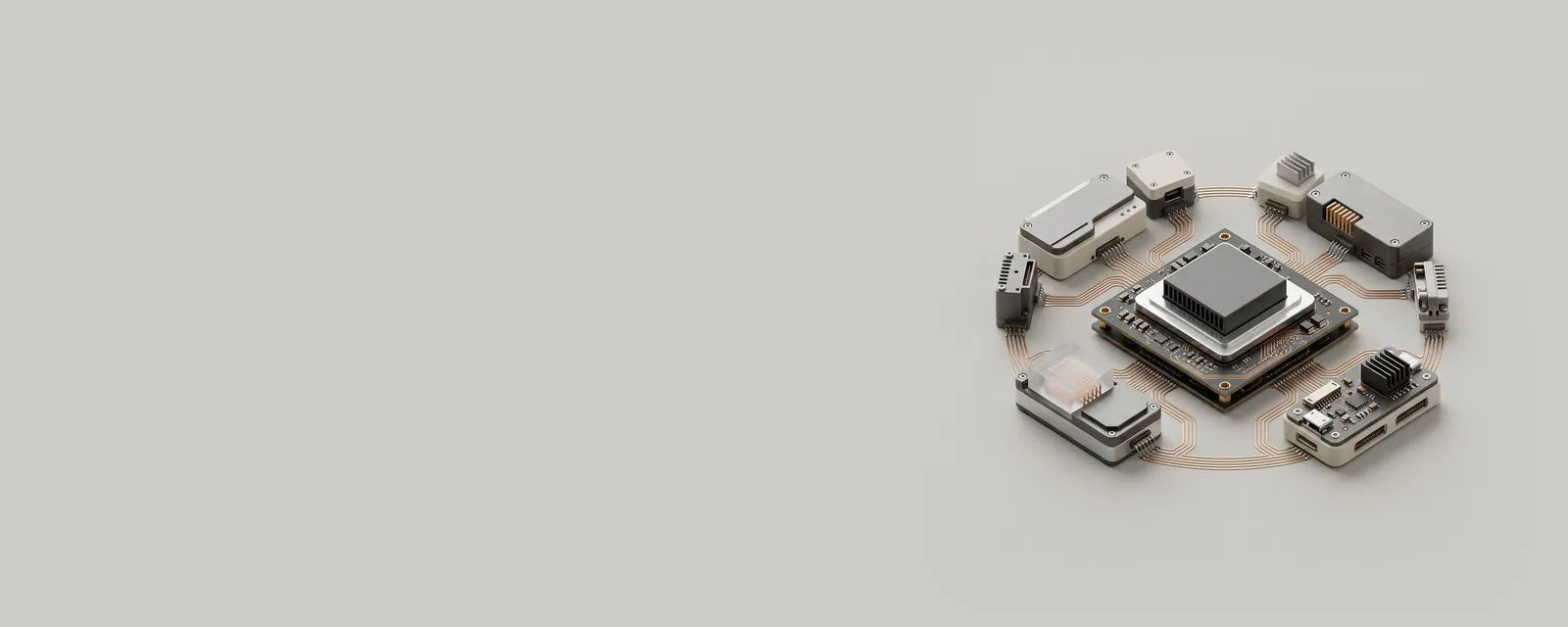
A controller is a hardware component that manages a bus or a class of devices, coordinating communication between the processor and the devices attached to it. Examples include USB host controllers and storage controllers.
In practice
A laptop's storage controller sits between the processor and the solid-state drive, handling the commands that read and write data. In Device Manager it appears under Storage controllers, with its own driver beneath the drive's entry.
Common confusion
Controller is also used for game controllers, which are input devices rather than bus managers. In driver discussions the term almost always means the managing chip. Some laptops also have an embedded controller handling keyboards, fans and batteries, which runs its own firmware.
Why it matters to readers
When several devices on one port group misbehave together, the controller they share is a natural suspect. Release notes for chipset packages frequently concern controllers.
A closer look
Chipset packages from computer and motherboard makers mainly concern controllers: USB host controllers, storage controllers, serial buses used by touchpads and sensors, and power management components. Many of these are served well by drivers built into Windows, which is why chipset packages often change little visibly. Their release notes are worth reading before deciding anything.